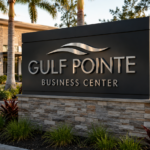
A monument sign is a permanent exterior sign built at ground level to identify a business, plaza, HOA, healthcare facility, or commercial property. In Fort Myers and Southwest Florida, the right monument sign depends on visibility, permitting, setbacks, materials, illumination, landscaping, wind exposure, and long-term tenant or brand changes.
Monument signs create a permanent first impression for Fort Myers properties
A monument sign is often the first physical brand experience a customer, patient, tenant, guest, or resident sees when arriving at a property. Unlike temporary banners or wall-mounted signs, monument signs are built as permanent architectural features. They can identify a single business, a medical office, a shopping center, a restaurant, an HOA entrance, an apartment community, or a commercial development.
For Fort Myers businesses, monument signs are especially valuable because many properties sit along busy roads where drivers have only seconds to recognize a location. A sign may look attractive up close, but if it is too low, hidden by landscaping, poorly lit, or placed outside the natural line of sight, it will not perform well.
A strong monument sign balances five factors:
1. Brand appearance
2. Code and permitting requirements
3. Road visibility and sight lines
4. Durable materials for Southwest Florida conditions
5. Installation quality, foundation, and long-term serviceability
If you are comparing options for a new monument sign, Cape Coral Signworks can help evaluate the site, design, permitting path, fabrication approach, and installation details before production begins.
Local permitting and property rules shape the final design
One of the biggest mistakes businesses make is treating a monument sign as a design-only project. In reality, the final sign must often satisfy several layers of approval before it can be built.
Depending on the property, your project may involve:
• City or county sign permit requirements
• Lee County or municipal code limits
• Property management approval
• Shopping center or commercial plaza sign criteria
• HOA or community association rules
• Setback requirements from roads, sidewalks, and driveways
• Easements, utilities, landscaping, and drainage considerations
• Electrical requirements for illuminated lettering or lighting
This is where local experience matters. A monument sign that looks perfect in a rendering may need adjustments because of height limits, square footage restrictions, visibility triangles, setbacks, or illumination rules. Planning for these requirements early helps avoid redesigns, delays, and unexpected costs.
Cape Coral Signworks supports clients through the practical steps of a sign permit, design coordination, fabrication, installation, and long-term maintenance, instead of handing off only one piece of the project.
Southwest Florida conditions demand durable monument sign construction
Fort Myers, Cape Coral, Estero, Bonita Springs, and surrounding Southwest Florida communities have demanding exterior conditions. Monument signs sit outside year-round in intense sun, heat, humidity, heavy rain, salt air exposure in some locations, and high winds during severe weather.
That means the cheapest construction method is not always the most cost-effective choice. A quality monument sign should be designed for long-term performance, not just a clean installation photo.
Important durability considerations include:
• UV-resistant finishes and paint systems
• Corrosion-resistant materials and hardware
• Proper structural support and footing design
• Drainage and moisture management
• Wind-load awareness
• Service access for illumination components
• Landscaping clearance around the sign face
• Replaceable panels for multi-tenant centers
Cape Coral Signworks Team Insight: Customers often focus mainly on the look of a monument sign and overlook the practical requirements behind it. Permitting, HOA or property management rules, setbacks, visibility, landscaping, and electrical needs can all affect the final design. In Southwest Florida, durability also matters because the sign must withstand strong sun, heat, humidity, heavy rain, and high winds.
Monument sign options vary by property type, budget, and timeline
The right monument sign depends on the property, audience, and approval process. A healthcare facility may need a clean, professional design with clear wayfinding and ADA-conscious signage nearby. A restaurant may need strong nighttime visibility and brand personality. A property manager may need tenant panels that can be changed as leases turn over. A developer may need temporary project signage now and permanent property identification later.
| Sign Type | Best Fit | Typical Cost Range | Typical Timeline | Permit Requirements |
| Non-illuminated monument sign | HOAs, offices, small commercial properties | $4,500–$12,000+ | 4–8 weeks | Usually required |
| Illuminated monument sign | Retail centers, restaurants, medical offices | $8,000–$25,000+ | 6–12 weeks | Required; electrical may apply |
| Multi-tenant monument sign | Plazas, property management, commercial real estate | $10,000–$35,000+ | 8–14 weeks | Required; panel criteria may apply |
| Masonry or architectural monument sign | Premium entrances, communities, corporate sites | $15,000–$50,000+ | 8–16+ weeks | Required; structural review may apply |
| Digital or changeable-message monument sign | Schools, churches, venues, high-traffic businesses | $20,000–$75,000+ | 10–18+ weeks | Required; stricter code review likely |
These ranges are general planning numbers. Final cost depends on size, materials, engineering, illumination, masonry work, electrical service, removal of an old sign, permitting, site access, and installation conditions.
A complete monument sign project moves from site review to installation
A professional monument sign process should prevent surprises. The best results come from coordinating design, approvals, fabrication, and installation as one connected project.
A typical project includes:
1. Site review and visibility planning
The team evaluates traffic direction, road speed, landscaping, driveways, sight lines, and existing structures.
2. Code and property requirement review
Local sign rules, landlord criteria, HOA requirements, and permit needs are checked before the design is finalized.
3. Design and material recommendations
The sign is planned around brand standards, durability, illumination, panel changes, and long-term maintenance.
4. Permit preparation and approvals
Drawings, specifications, and required documentation are submitted for review when applicable.
5. Fabrication and coordination
The structure, faces, lettering, lighting, tenant panels, and finishes are produced.
6. Foundation, electrical, and installation
Installation may include footing work, electrical coordination, placement, mounting, and final inspection needs.
A recent local example involved an HOA monument sign in the Estero area that was approximately 9 feet wide by 4 feet high with illuminated lettering and new electrical service. That type of project shows why monument signage is more than fabrication alone. The sign structure, foundation, lighting, permitting, landscaping, and installation all have to work together.
Monument signs often work with other exterior and property signage
A monument sign should not be planned in isolation. It often anchors a larger property signage system.
For example:
• A medical office may pair a monument sign with interior wayfinding and ADA signs
• A shopping center may combine a monument sign with tenant panels and storefront channel letter signs
• A restaurant may use a monument sign along with window graphics, menu boards, and illuminated exterior signage.
• A service business may reinforce visibility with fleet graphics or vehicle wraps.
• A commercial property manager may need ongoing sign removal, tenant panel changes, and maintenance as tenants move in and out.
When the full signage system is planned together, the property looks more consistent, customers navigate more easily, and future changes become easier to manage.
The best monument sign partner handles more than fabrication
Fort Myers businesses have many sign vendors to choose from, but monument signs require more than quick production. The right partner should understand design, permitting, materials, fabrication, installation, and maintenance.
Cape Coral Signworks is a family-owned, full-service commercial sign partner serving Southwest Florida businesses that need practical guidance, not commodity sign production. The team works with property managers, healthcare facilities, restaurants, hospitality businesses, construction firms, developers, HOAs, and local business owners who need signage built for real-world conditions.
A better monument sign starts with better questions: Where will drivers first see it? What rules affect it? Will tenants change? Does it need lighting? Will landscaping hide it in two years? Can it hold up to Southwest Florida weather?
Answer those questions early, and the final sign will do more than mark an address. It will make the property easier to find, easier to recognize, and more valuable over time.
FAQ
Most monument signs in the Fort Myers area start around $4,500 for simpler non-illuminated signs and can exceed $25,000 to $50,000 for illuminated, masonry, architectural, or multi-tenant signs. Size, materials, electrical work, engineering, permitting, site conditions, and installation complexity all affect the final price.
Do I need a permit for a monument sign in Fort Myers?
In most cases, yes. Permanent exterior monument signs usually require a sign permit, and illuminated signs may involve additional electrical requirements. Property owner, shopping center, HOA, or commercial association approval may also be needed before fabrication or installation.
How long does it take to design and install a monument sign?
A typical monument sign project can take 4 to 12 weeks, depending on design complexity, approvals, permitting, fabrication, electrical coordination, and installation conditions. Larger architectural, illuminated, or multi-tenant monument signs may take longer, especially if engineering or property management approval is required.
What materials are best for monument signs in Southwest Florida?
Good material choices depend on the design, budget, and site, but Southwest Florida monument signs should use durable exterior-grade materials, corrosion-resistant hardware, UV-resistant finishes, and proper structural supports. The sign should be built for sun, heat, humidity, heavy rain, and high-wind exposure.
Can tenant panels be changed on a monument sign?
Yes. Multi-tenant monument signs can be designed with replaceable tenant panels so property managers can update business names as tenants change. Planning for replaceable panels from the beginning is usually easier and less expensive than modifying a sign later.
Next Step for Cape Coral Signworks
Recent Posts